educative · zk
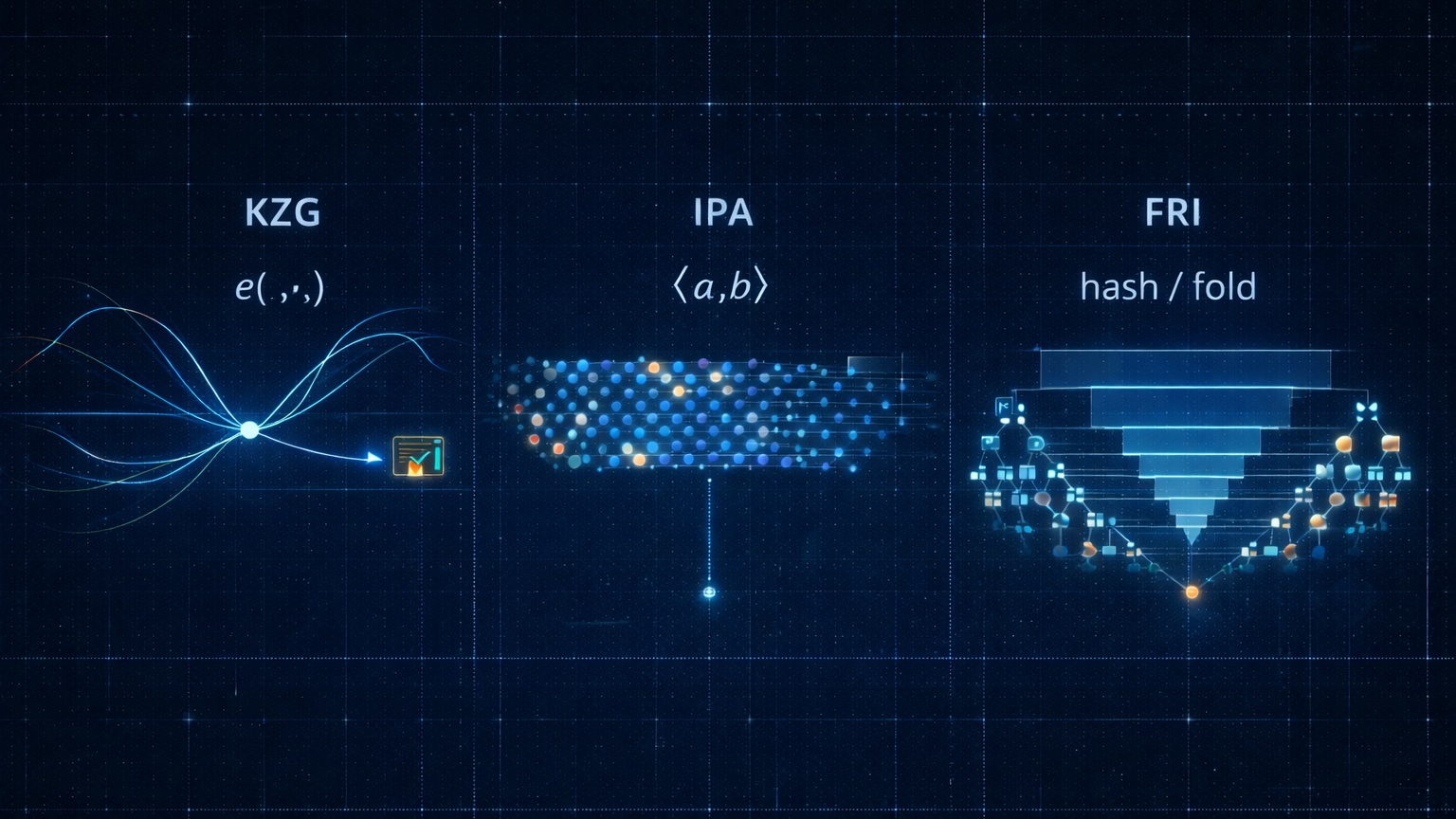
A practical guide to the trade-offs between KZG, IPA/Halo, and FRI, the three major polynomial commitment scheme families powering modern zero-knowledge proof systems. We compare proof sizes, verification costs, trust assumptions, benchmarks, and on-chain gas costs.
ZK/SEC, University of Padua
March 23, 2026
10 min
Read →
security · zk

The first two known exploits against live ZK circuits happened in the past week. Both stem from the same root cause. They were not subtle underconstrained bugs, but rather Groth16 verifiers (generated by snarkjs) with an incorrect setup (just missing the last step). One was exploited by white-hat hackers for ~$1.5M, the other was drained for 5 ETH.
Stefanos Chaliasos, Hao Pham
February 27, 2026
14 min
educative · security
Google Research used Gemini to find a bug in a cryptography paper on SNARGs from LWE. We summarize how those events unfolded, look at their iterative self-correction prompting strategy and discuss the growing role of LLMs in academic research.
Nicolas Mohnblatt
February 10, 2026
5 min