ZK/SEC Research notes from zkSecurity

ZK/SEC Quarterly

educative · zk

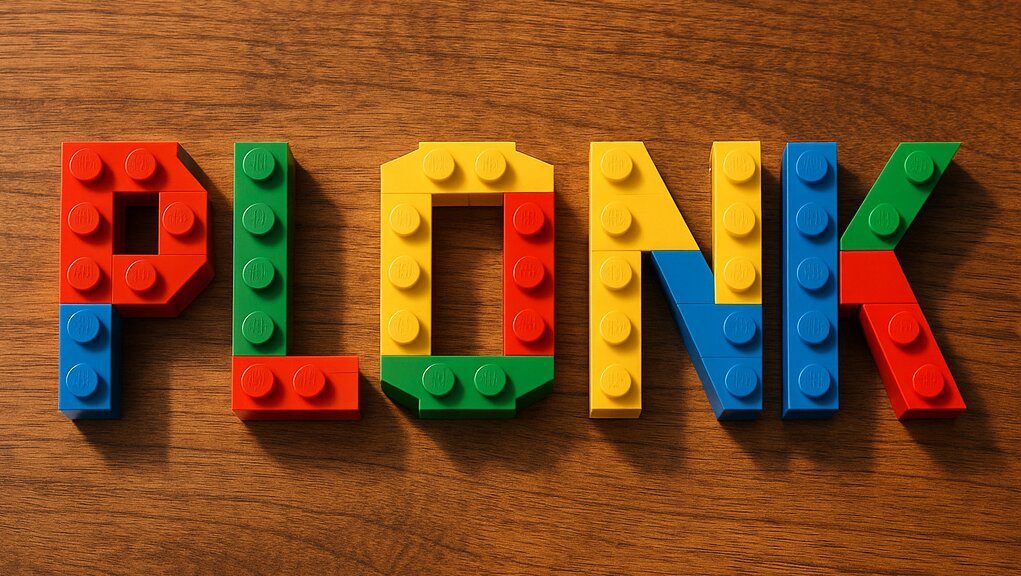
𝒫𝔩𝔬𝔫𝒦: A Hands-On Deep Dive

𝒫𝔩𝔬𝔫𝒦’s many layers (selector polynomials, wiring permutations, quotient tests, random challenges and KZG commitments) can be overwhelming. Our zkSecurity tutorial uses a single running example to demystify them all. Build tables and interpolate low-degree BN254 polynomials, encode gate and wiring constraints, run deterministic and probabilistic zero-tests, then layer in randomness and KZG commitments to produce a full Fiat–Shamir proof. Grab the Jupyter Notebook (Sage or Cocalc), or work in your favorite language with our guided test cases.

Circle STARKs · Part 3

Circle STARKs: Part III, Circle FFT

In this blog post, we explore how to efficiently implement polynomial operations using Circle FFT in the context of STARKs, drawing parallels with the Cooley-Tukey FFT. We discuss how the Circle FFT handles bivariate polynomials over the circle group, replacing traditional multiplicative subgroups with twin-cosets. You'll discover the nuanced process of decomposing and recomposing polynomials using projection and squaring maps, leading to efficient computations. We also address the gap between the polynomial degree space and the space spanned by Circle FFT. This is a fascinating dive into the heart of polynomial computations in cryptography.

security · zk

Uncovering the Query Collision Bug in Halo2: How a Single Extra Query Breaks Soundness

We recently discovered a subtle but important soundness issue in Halo2, which we’ve named the query collision bug. It affects certain edge-case circuits and was present in widely used versions, including the main Zcash implementation and PSE’s fork. We disclosed the issue to the relevant teams, including Zcash, PSE, and Axiom, all of whom have since patched it. While no known production circuits were affected, the bug reveals a surprising vulnerability in the proving system that deserves attention.

announcement · tools

Bug Hunt: Zero-Knowledge, Full-Paranoia, and the AI That Stares Back

Over the past year, we've been diving into whether AI can effectively identify bugs in zero-knowledge circuits and applications, sparking questions about the future of auditing. This led us to develop SnarkSentinel, an AI-powered auditing tool. We'll share what worked, what didn’t, and how our journey with AI could impact auditing. From early challenges with Circom to innovative methods like retrieval-augmented generation and agent-led probing, we'll give you a peek into our findings, including both successes and setbacks with bug detection. Discover how AI might enhance or change the landscape of auditing and what this means for developers and security pros alike.

Proof is in the Pudding · Part 4

Trust, But Measure: A Friendly Intro to TEEs with Intel TDX

In the latest session of "Proof is in the Pudding," we teamed up with Archetype to explore the basics of Trusted Execution Environments. Through a collaborative whiteboarding session, we break down key concepts and practical applications, making this tech topic accessible and engaging. Dive in to discover how these environments can enhance digital security in a straightforward way.

security · zk

Uncovering the Phantom Challenge Soundness Bug in Solana's ZK ElGamal Proof Program

In June 2025, we uncovered a serious soundness issue in Solana's ZK ElGamal Proof Program that could let attackers manipulate confidential token transfers undetected. We worked with the Anza team to quickly address the flaw by pausing and disabling vulnerable components. This post dives into the root cause, which was a subtle mistake in handling prover-generated challenges within sigma OR proofs, revealing broader lessons in zero-knowledge protocol security. If you're interested in cryptographic protocol design, this could provide valuable insights.

Also in this issue 2 more articles