ZK/SEC Research notes from zkSecurity
All posts
educative · zk · plonk

𝒫𝔩𝔬𝔫𝒦: A Hands-On Deep Dive

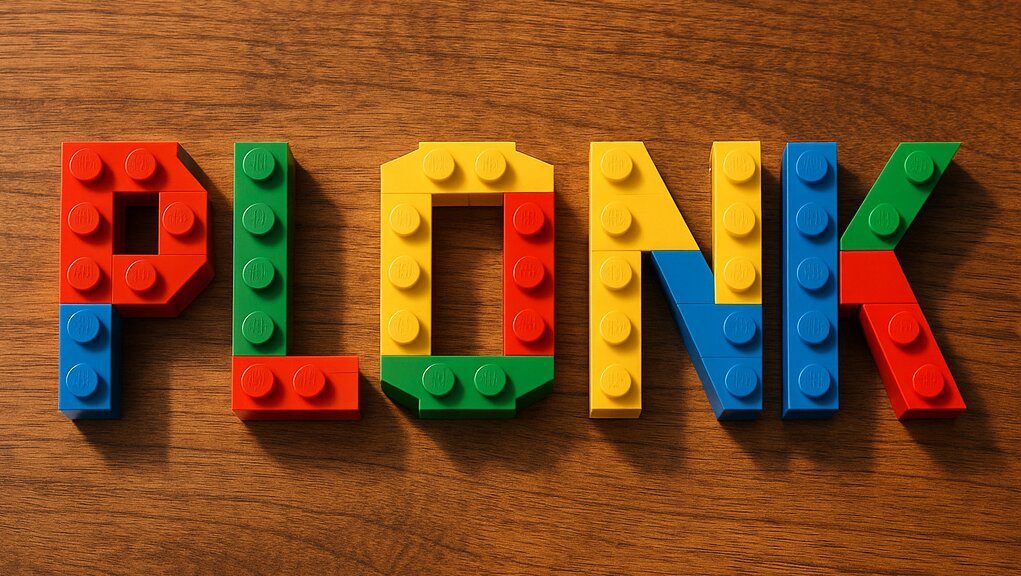
PLONK

Understanding 𝒫𝔩𝔬𝔫𝒦 can be daunting given its multiple building blocks. Selector polynomials, wiring permutations, quotient tests, random challenges, and KZG commitments can be overwhelming at first sight. At zkSecurity, we have created a hands-on tutorial to demystify each piece through a progressive running example: you'll build tables of intermediate values, interpolate low-degree polynomials over the BN254 field, encode gate and wiring constraints, and perform both deterministic and probabilistic zero-tests.

📖 Access the tutorial

Whether you are already familiar with the protocol or curious to learn more about it, this tutorial helps you understand the inner workings of 𝒫𝔩𝔬𝔫𝒦, turning a complex proof system into an accessible, step-by-step learning journey.

Choose how to solve: Download a Jupyter Notebook version of the tutorial and solve with Sage or on Cocalc. But you may also solve in some other programming language, we guide you with test cases along the way!

Deep Dives into building blocks: Each algebraic construction is motivated through the running example, from vanishing polynomials to the grand-product argument, bridging theory and practice.

Progressive Complexity: Start with a simple circuit, then incrementally introduce selectors, quotient polynomials, random challenges, and KZG commitments, culminating in a full non-interactive Fiat–Shamir 𝒫𝔩𝔬𝔫𝒦 proof.

Keep reading
Recommended

Groth16, Intuitively

Groth16 is still the gold standard for succinct SNARKs: 128-byte proofs, constant-size verification, and a decade of real-world deployment. But despite its ubiquity, almost nobody explains *why* it works the way it does. In this post, we build Groth16 from the ground up, starting from R1CS and QAPs, then layer in pairings, trusted setup parameters, and the separator tricks (α, β, γ, δ) that make the scheme sound. By the end, you should have an intuitive grasp of every term in the final verifier equation.

David Wong · May 01, 2026

Learn Sumcheck, MLE, and HyperPlonk: An Interactive Tutorial with SageMath

A new interactive tutorial on Sumcheck, Multilinear Extensions, and HyperPlonk with complete SageMath implementations and exercises. Go beyond the theory and understand how these protocols actually work by implementing them yourself.

Marco Gaglianese · November 22, 2025

Sum-Check as an Algebraic Tensor Reduction: Part I

This post introduces algebraic tensor reductions as a unifying framework for understanding recursive proof protocols, using sum-check as the main motivating example. It walks through one recursive step of sum-check, showing how the prover sends a univariate summary, the verifier checks sum consistency, and the original claim is reduced to a smaller claim with one fewer variable. A small bivariate example illustrates how this “peel off one variable, check, then fold with randomness” pattern works concretely. The post sets up the rest of the series, which will introduce the tensor language needed to recover classical sum-check as an algebraic tensor reduction.

Marco Besier · April 27, 2026
More to explore

Uncovering the Query Collision Bug in Halo2: How a Single Extra Query Breaks Soundness

We recently discovered a subtle but important soundness issue in Halo2, which we’ve named the query collision bug. It affects certain edge-case circuits and was present in widely used versions, including the main Zcash implementation and PSE’s fork. We disclosed the issue to the relevant teams, including Zcash, PSE, and Axiom, all of whom have since patched it. While no known production circuits were affected, the bug reveals a surprising vulnerability in the proving system that deserves attention.

Suneal Gong · July 09, 2025

Common Circom Pitfalls and How to Dodge Them, Part 2

This post is the second part of our series on Circom pitfalls. While part 1 covered issues with assertions, hints, and aliasing, this one explores unsafe component usage and the subtle fact that Circom’s comparison operators work over signed integers.

Marco Besier · November 10, 2025

Stone CLI: Making Cairo programming more accessible

We're excited to introduce the Stone CLI, our new tool designed to simplify the process of proving and verifying Cairo programs. Working alongside the StarkWare team, we've streamlined the toolchain for developers, making it easier to compile, run, and prove these programs with less hassle. You'll get the scoop on how to seamlessly use the Stone CLI across various verifiers, serialize proofs, and even create Ethereum-compliant proofs using the bootloader. Dive in to see how we're making life easier for both beginners and seasoned Cairo enthusiasts!

Jason Park · November 10, 2024