ZK/SEC Research notes from zkSecurity
All series
Series

Sum-Check as an Algebraic Tensor Reduction

3 parts April 2026 – May 2026 25 min in total Marco Besier
  1. Part 1

    Sum-Check as an Algebraic Tensor Reduction: Part I

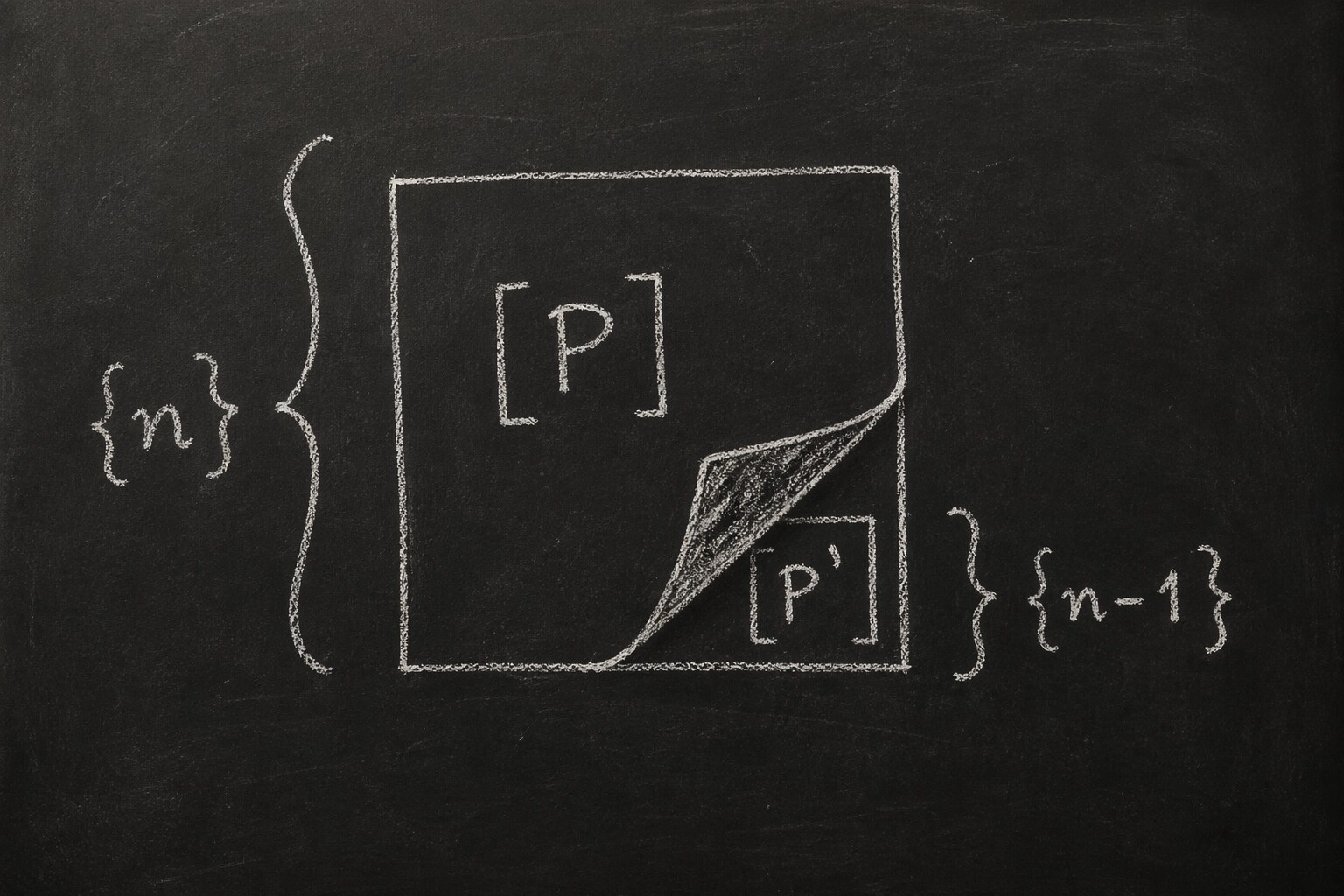
    This post introduces algebraic tensor reductions as a unifying framework for understanding recursive proof protocols, using sum-check as the main motivating example. It walks through one recursive step of sum-check, showing how the prover sends a univariate summary, the verifier checks sum consistency, and the original claim is reduced to a smaller claim with one fewer variable. A small bivariate example illustrates how this “peel off one variable, check, then fold with randomness” pattern works concretely. The post sets up the rest of the series, which will introduce the tensor language needed to recover classical sum-check as an algebraic tensor reduction.


  2. Part 2

    Sum-Check as an Algebraic Tensor Reduction: Part II

    In this part of our series, we start introducing the algebraic language needed to formalize sum-check as a tensor reduction. We start with the basics of rings and modules. Rings generalize fields by dropping the requirement that every non-zero element has a multiplicative inverse. Modules then generalize vector spaces by allowing scalars to come from a ring instead of a field. In this post, we’ll use plenty of examples to make these ideas concrete and build intuition along the way.

  3. Part 3

    Sum-Check as an Algebraic Tensor Reduction: Part III

    This post is all about the maps that let us move between modules without breaking their structure. We’ll see when a map is truly “linear,” when two modules are (secretly) the same, and why two-input maps deserve special attention. Along the way, (bi-)linear maps and isomorphisms become less like abstract definitions and more like tools we can actually use. By the end, we’ll have all the tooling we need to tackle abstract tensor products head-on.

Other series see all →